
Euro 2028 Qualifying: How the Road to the Finals Works
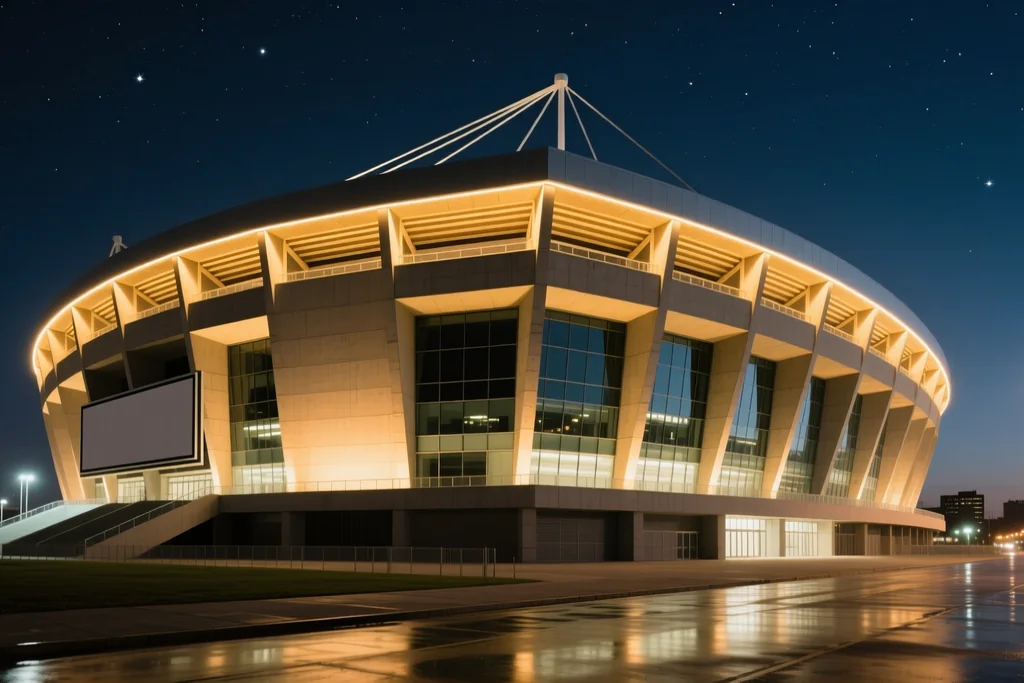
Euro 2028 qualifying decides twenty-four places at a tournament hosted by four nations, and the campaign begins from a starting position that is already unusual. England, Scotland, Wales and Ireland are the hosts, and they take part in qualifying rather than stepping straight into the finals.
The structure that follows is a two-year competition played out in the same international windows used by every other European team, with the Nations League feeding into the draw and a play-off route offering a second chance to teams that miss out.
Euro 2028 qualifying: the hosts and the arithmetic
Four host nations do not mean four guaranteed places. The automatic places reserved for the hosts are capped at two, so the great majority of the twenty-four places are decided on the pitch, in the qualifying groups and through the play-off route.
The hosts' situation also changes their own planning. Because they play a full qualifying campaign, they carry the same competitive pressure as everyone else while also staging the tournament, which makes squad management harder rather than easier.
| Element | Detail |
|---|---|
| Places available | 24, including the host nations |
| Automatic host places | No more than two |
| Group stage | Home and away fixtures across the campaign |
| Automatic qualification | Group winners and runners-up in each group |
| Play-off route | Remaining places decided by knockout ties |
| Seeding input | Nations League performance sets the draw pots |
The precise number of groups and the calendar of matchdays are set around the international windows, and the draw itself is seeded by performance in the preceding Nations League campaign.
Euro 2028 qualifying groups: winners, runners-up and the margin
Automatic qualification usually goes to the teams that finish in the top two of each group, which puts a premium on avoiding a slow start. In a campaign of eight or ten matches, a dropped point in the first two fixtures often decides the final positions.
The away match is where groups are usually lost. Teams that take four points from two away trips are almost always in contention, while one that loses both arrives at the spring windows needing to win every remaining fixture.
Euro 2028 play-offs: the route and how it is decided
Teams that miss automatic qualification are not automatically eliminated. The play-offs are built from Nations League performance, which is what gives the competition its second function and what makes autumn results matter even for teams that expect to qualify comfortably.
The mechanism rewards consistency across the cycle. A team that performs well in its league but stumbles in qualifying retains a route to the finals, while a team that treats the autumn fixtures lightly can find itself without a second chance.

What the hosts do with two years
The host nations face a normal qualifying campaign rather than a free pass. They are in the draw, they play their group, and a difficult autumn can leave them competing for a place like any other side.
The compensation is control. Hosts can arrange additional fixtures against specific styles, choose venues that suit a tactical experiment and give new players minutes outside the qualifying matches, which is where the staging role becomes an advantage.
Why the qualification calendar is compressed
The 2026-28 cycle has the same windows as any other two-year period, and the qualifying campaign shares them with the Nations League and preparation fixtures. That compression means matchdays arrive in pairs with almost no training time between them.
For smaller federations the compression is harder still, because squads often include players based in several countries. Travel time eats into preparation, and a Tuesday fixture after a Saturday match can mean a squad that meets at the airport.
What qualifying actually tests
Qualification rewards consistency more than brilliance. A team that wins its home matches and avoids defeat away will almost always be in the top two, regardless of how well it plays in the individual games.
That is why qualifying campaigns are usually decided by squad depth rather than by a starting eleven. An injury to a key player in October must be absorbed by a replacement who has already played competitive minutes, which is the practical argument for rotation.
Five things the campaign will be decided by
- Home form: maximum points in home fixtures removes most of the risk.
- Away points: four from two away trips is the usual benchmark for a top-two finish.
- Squad depth: the ability to cover injuries without losing competitive fixtures.
- Seeding: draw position, influenced by Nations League results.
- The play-off safety net, available to teams with a strong league campaign behind them.
The seeding that shapes the draw is explained in the guide to Euro 2028 seeding and the play-off pathway, and the host structure is set out in the piece on Euro 2028 hosts and stadiums.
Read next
Euro 2028 Hosts: Four Nations, Nine Stadiums
Four nations, nine stadiums and a final at Wembley: the Euro 2028 host map and the travel it creates for supporters.
2026-09-16
Euro 2028 Format: 24 Teams, 51 Matches
Six groups, a round of 16 and four third-placed teams surviving the group stage: the Euro 2028 format in detail.
2026-08-13
Euro 2028 Seeding and the Play-Off Pathway
Pots, play-offs and second chances: how the Euro 2028 draw is seeded and how the last places are decided.
2026-08-11