
Euro 2028 Hosts: Four Nations, Nine Stadiums
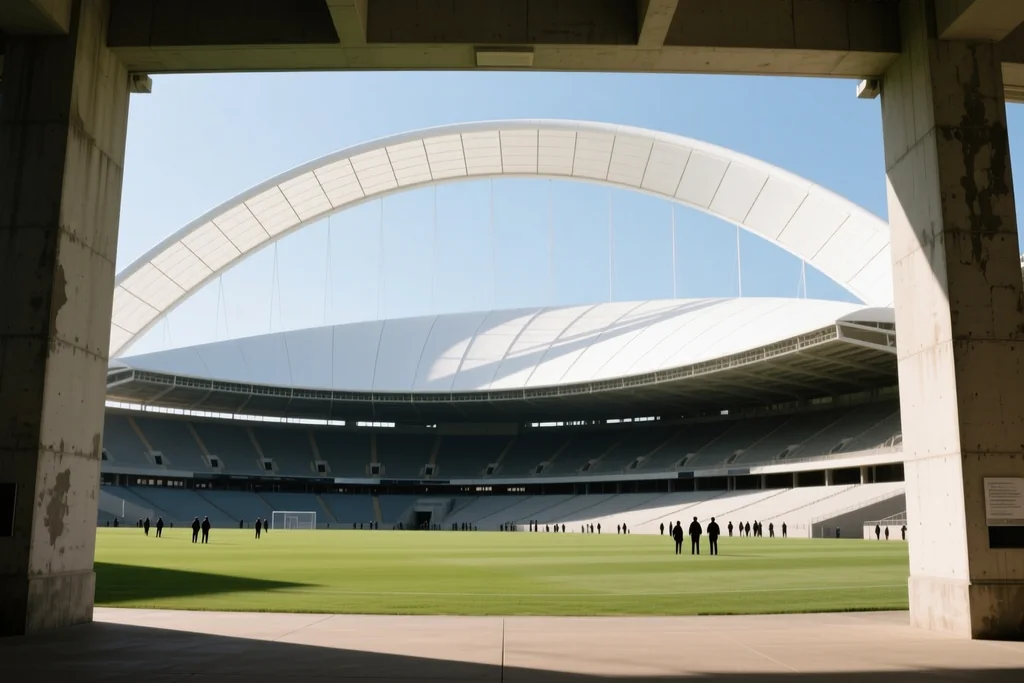
The Euro 2028 hosts are four nations, and the arrangement is the widest the European Championship has used. England, Scotland, Wales and Ireland are the hosts, and the nine stadiums involved are spread across eight cities: five in England plus Glasgow, Cardiff and Dublin.
The host list was confirmed years before the tournament, and it shaped the bid itself: a competition shared between four associations, with the final scheduled for Wembley Stadium in London in July 2028.
Euro 2028 hosts: four nations and one tournament
Co-hosting at this scale is unprecedented for the European Championship, which has previously been shared by two nations at most. It distributes the cost of staging across four associations and gives each host a direct stake in the tournament.
It also creates a practical problem that single-host tournaments avoid. The hosts are not handed a place in the finals for hosting alone: the automatic places reserved for them are limited to no more than two, and they take part in the qualifying competition like every other European team. The format has to accommodate that without reducing the field to a size that undermines the competition.
| Nation | Host city | Venue status |
|---|---|---|
| England | London | Two venues, including Wembley Stadium for the final |
| England | Manchester | Large modern stadium in the east of the city |
| England | Newcastle | City-centre ground with a large capacity |
| England | Birmingham | Historic ground with redevelopment plans |
| England | Liverpool | New waterfront stadium on the docks |
| Scotland | Glasgow | National stadium |
| Wales | Cardiff | National stadium in the city centre |
| Ireland | Dublin | National stadium in the south of the city |
Every city on the list already stages top-level football, which is why the venue plan relies on existing grounds rather than on a national stadium built from scratch for the tournament.
Euro 2028 stadiums: the final at Wembley
Wembley Stadium will host the final in July 2028, a decision that places the closing match at the largest venue in the host group. The stadium has hosted European Championship finals before, most recently in 2021 and previously in 1996.
Hosting the final in London also concentrates the largest single ticket allocation in one market, which shapes the tournament's commercial profile and its transport planning.
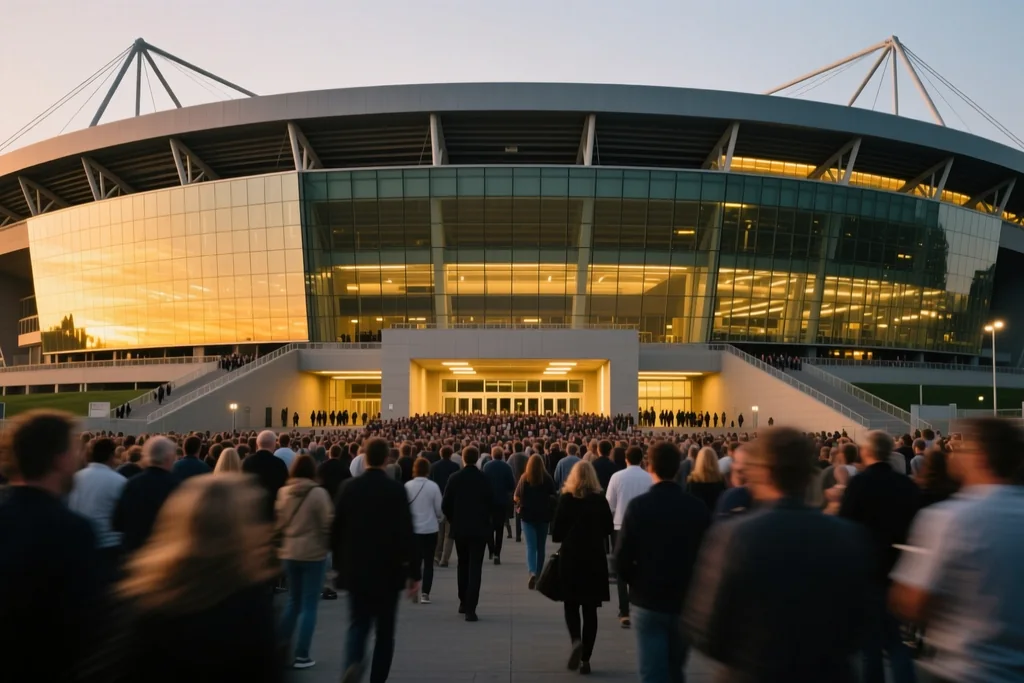
Capacity and ticket demand
Nine stadiums is a compact list for a 24-team tournament, and capacity is concentrated in a small number of very large grounds. That mix decides how many matches are played in front of sixty thousand people and how many in front of thirty thousand.
Demand at a European Championship is highest for fixtures involving the host nations and for the knockout rounds. With four hosts involved, more group matches than usual are likely to be played in a full stadium.
The distribution also shapes the atmosphere. A tournament staged in nine established football grounds feels different from one spread across twenty venues, because more of the matches are played in cities that already live with the game.
Euro 2028 host cities: travel between venues
The geography is more compact than a World Cup spread across a continent, and that is a deliberate part of the design. Most host cities are connected by short flights or direct rail links, which reduces travel time for squads and makes following a team across the tournament realistic for supporters.
Cardiff and Dublin are the exceptions, requiring a flight or a ferry crossing from the British mainland. In a tournament with 51 matches across four weeks, those journeys become a practical consideration for anyone planning to attend more than one venue.
What the host nations do with two years
Hosts play qualifying rather than sitting out the campaign. The 2026-28 cycle gives each of the four nations a set of competitive Nations League fixtures, a qualifying group and a series of preparation matches, which is enough football to build a squad and enough to test it in matches that carry consequences.
The advantage is scheduling. A host coach can arrange additional fixtures against specific styles of opponent, choose venues that suit a tactical experiment and plan a full two years knowing that the finals themselves are not the only route into the tournament.
Five facts about the hosting plan
- Four host nations: England, Scotland, Wales and Ireland.
- Nine stadiums in eight cities, with two in London and one in each of the other host cities.
- Wembley Stadium in London is scheduled to host the final in July 2028.
- 24 teams will compete, with no more than two automatic places reserved for the hosts.
- 51 matches will be played, matching the format used in 2016 and 2024.
The competition format is set out in the guide to the Euro 2028 format, and the route into the finals is explained in the piece on Euro 2028 qualifying.
Read next
Euro 2028 Qualifying: How the Road to the Finals Works
Twenty-four places, with no more than two reserved for the hosts. How the Euro 2028 qualifying campaign is built from the first matchday.
2026-09-22
Euro 2028 Format: 24 Teams, 51 Matches
Six groups, a round of 16 and four third-placed teams surviving the group stage: the Euro 2028 format in detail.
2026-08-13
Euro 2028 Seeding and the Play-Off Pathway
Pots, play-offs and second chances: how the Euro 2028 draw is seeded and how the last places are decided.
2026-08-11