
The National Team Cycle 2026-28: What Squads Face Now
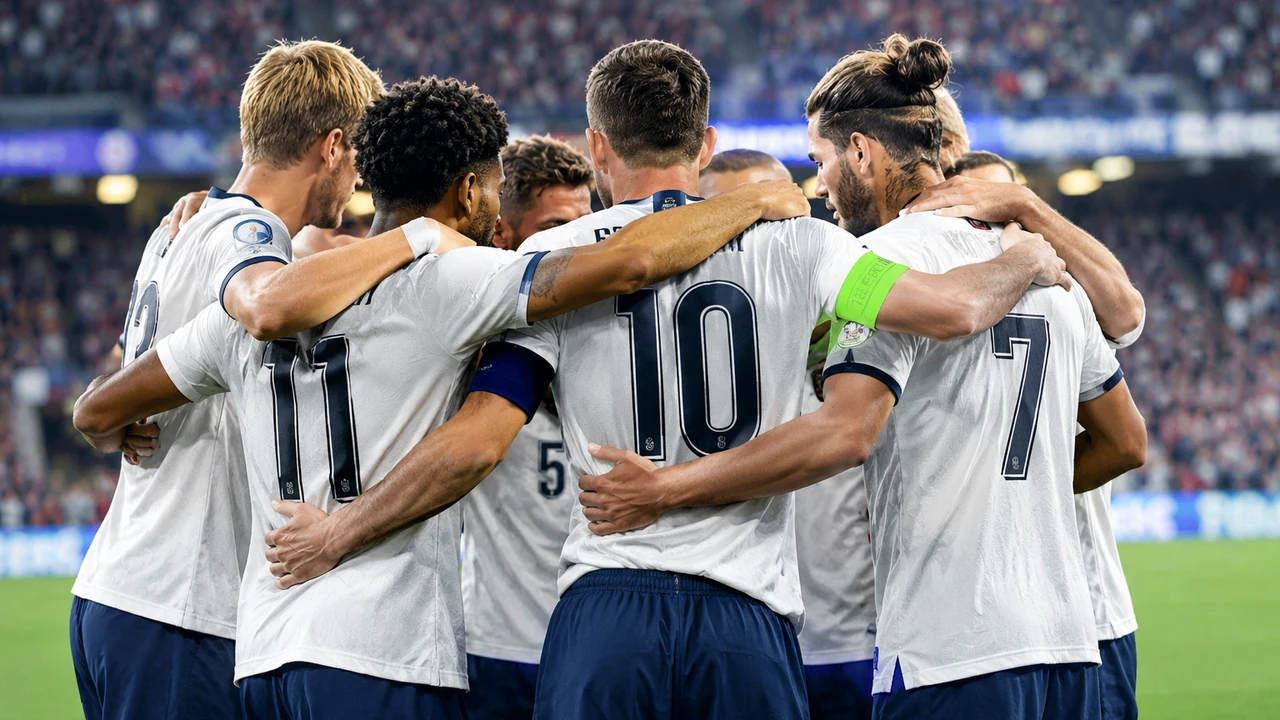
The national team cycle between a World Cup and the next European Championship has its own logic. For national teams in Europe the 2026-28 period contains a Nations League campaign, a qualifying competition and a series of international windows that allow roughly twenty matches in total.
That is not a lot of football to rebuild a squad, test a system and secure a place at Euro 2028. The cycle is short, the windows are fixed by the international calendar, and every coach knows exactly how many opportunities remain.
National team cycle: the shape of an international cycle
The pattern is predictable even when the football is not. After a major tournament, the autumn brings competitive fixtures, the following spring and autumn carry the qualifying or league campaign, and the last year is dominated by the competition itself.
Each window contains a maximum of two matches, usually three or four days apart. That constraint is why international coaches talk about repetition rather than innovation: there is simply no training time to install a complex system.
| Phase | Competition | Purpose |
|---|---|---|
| Autumn 2026 | Nations League league phase | Competitive matches, seeding and squad testing |
| Winter and spring 2027 | Nations League knockouts | High-stakes fixtures for the leading countries |
| 2027 onwards | Euro 2028 qualifying | Deciding the twenty-four places for the finals |
| Final year | Preparation windows | Pattern work, set pieces and final squad choices |
| Summer 2028 | European Championship | The tournament itself, hosted by four nations |
The cycle solves a problem that used to be worse. Before the Nations League existed, the two years after a World Cup were often filled with friendlies that counted for little and changed nothing.
National team fixtures 2026: competitive fixtures and what they fix
Competitive matches change behaviour. Ranking points, promotion and relegation around the leading results all matter, which makes a coach's selection decisions more consequential and the evidence from each match more meaningful.
Results also feed directly into seeding. A strong Nations League campaign improves a team's positioning for the qualifying draw, which in turn determines the difficulty of the group it must escape to reach Euro 2028.
International football calendar: squad renewal in a fixed window
Twenty matches sounds like enough room to introduce a new generation, but each window allows only a handful of changes to a starting eleven before results suffer. Coaches typically phase the transition over several windows rather than one.
The usual method is to introduce two or three new players per window and keep the experienced core in place around them. That protects results while gradually reducing the reliance on players who will not be available in four years.
Why the calendar is fixed so far in advance
International windows are agreed years ahead between confederations, clubs and broadcasters. That is what allows a club to plan a season around the absence of its international players, and it is what makes a national coach's schedule predictable.
The rigidity cuts both ways. A coach cannot add a training camp outside the agreed windows, and a club is not obliged to release a player except during them, which limits the time available for tactical work.
The consequence is that preparation happens inside matches rather than in sessions. Coaches use fixtures to rehearse, and accept that the version of the team seen in October may look different from the one that appears at a tournament two years later.
Why preparation time is the binding constraint
A club coach works with the same players every day. A national coach meets them four or five times a year, which means a complex tactical idea needs to survive months without reinforcement.
The systems that work internationally are usually simple in principle and detailed in habit: a defined pressing trigger, a fixed set of set-piece routines and clear roles for players who may not be familiar with each other.
How the cycle ends
Everything in the 2026-28 period points at the finals held across England, Scotland, Wales and Ireland. Qualifying decides the places, and the final months are spent narrowing a squad rather than building one.
Judging a cycle therefore means looking at the whole two years rather than at its last match. A team can qualify comfortably and still have failed to renew a squad, or miss out narrowly and leave a stronger group behind.
Five numbers that define the window
- Two matches per international window, separated by three or four days.
- Roughly twenty matches across the two-year cycle for a leading European team.
- 24 places available at Euro 2028, with no more than two of them reserved for the hosts.
- 51 matches in the finals tournament, unchanged from the 24-team format of 2024.
- Nine stadiums across four host nations for the 2028 finals.
The fixtures that structure the cycle are described in the guide to the Nations League 2026-27, and the qualification route is set out in the piece on the road to Euro 2028.
Read next
Rebuilding a National Team After a World Cup
Every cycle ends with a wave of retirements. The rebuilds that work share the same sequence of decisions.
2026-09-20
National Team Rotation: Squad Depth and Minutes
Two matches in five days with one training session between them. Rotation in international football is a logistics problem before it is a tactical one.
2026-09-14
Nations League 2026-27: Format and Key Dates
The Nations League is no longer a friendly replacement. It sets pots, play-off routes and the mood around a national team.
2026-09-02