
Rebuilding a National Team After a World Cup
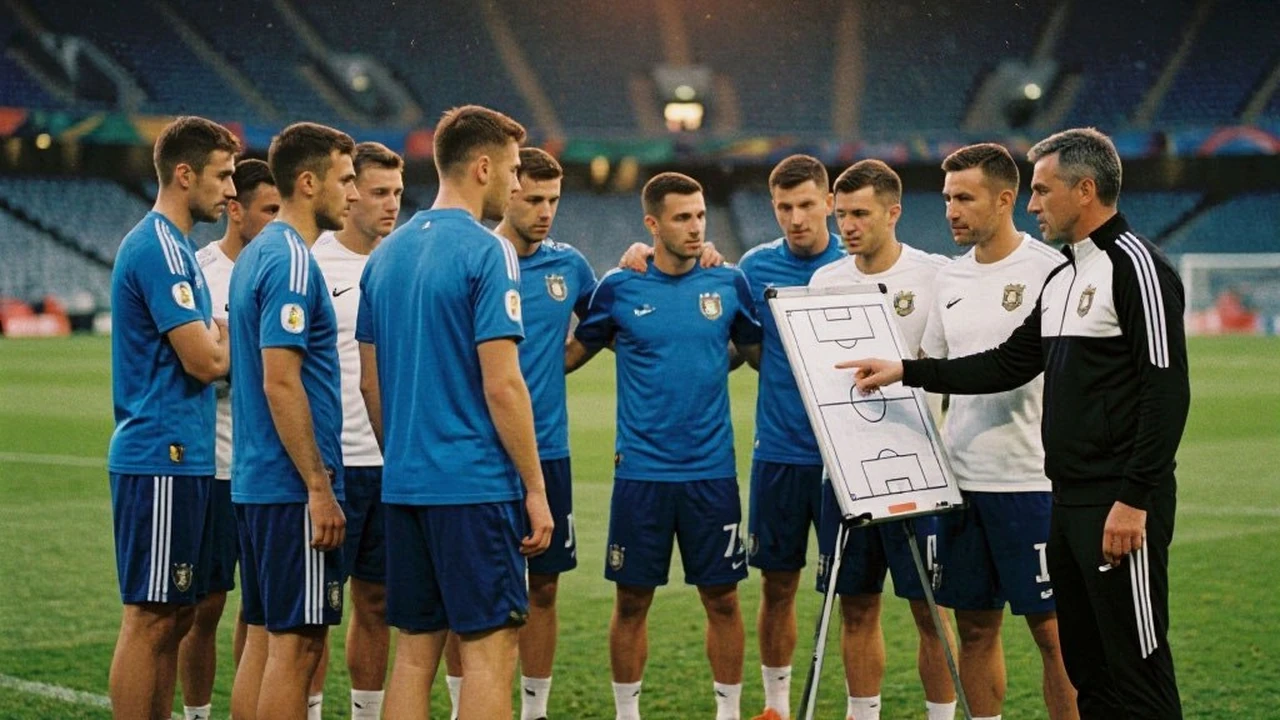
Rebuilding a national team begins with a wave of international retirements, and the summer of 2026 produced the same familiar pattern. Players who have spent a decade with a national team decide that a tournament on the other side of an expanded season is the right place to stop.
Rebuilding is not simply replacing those players. It is deciding which parts of the previous cycle remain valid, which systems still suit the available group, and how quickly the next generation can be asked to carry responsibility in matches that count.
Rebuilding a national team: the retirement wave and its timing
Retirements usually arrive within weeks of a tournament rather than immediately, as players weigh another two-year cycle against their club commitments. The effect is that a coach can plan a squad in autumn only to lose a senior figure to a decision taken later.
Midfielders and defenders tend to extend careers longer than forwards, because their value depends more on reading the game than on pace. That changes the shape of the rebuild: it is usually the attack that turns over first.
National team rebuild: the order in which it happens
Coaches rarely change everything at once. The usual sequence starts with positions where the incumbent has already left, then moves to areas where a younger player has shown enough in club football to be tested.
The Nations League helps because it provides competitive fixtures with real consequences. Introducing a player in a fixture that decides promotion is a different experiment from doing so in a friendly, and it produces much better evidence.
| Step | Action | Typical window |
|---|---|---|
| 1 | Replace retired starters with direct substitutes | First autumn window |
| 2 | Test two or three candidates in competitive fixtures | Second and third windows |
| 3 | Confirm a system that suits the new group | First full year |
| 4 | Reduce reliance on the oldest remaining players | Second year |
| 5 | Settle a final squad and its internal hierarchy | Final months before the finals |
The sequence is rarely followed exactly, but the principle behind it is consistent: protect results while changing the personnel, rather than changing both at once.
Keeping experience while lowering the average age
A rebuild that removes every experienced player usually fails, because a squad needs people who have handled a tournament before. The common approach is to keep a small group of senior players and give them explicit responsibility for bringing new arrivals into the group.
That role is often formal rather than symbolic. Senior players carry set-piece organisation, penalty order and the on-pitch communication that a coach cannot transmit from the bench during a match.
The pressure to keep results while changing
Rebuilding is politically difficult in international football, because a coach is judged on the matches he uses for experimentation. A defeat in a competitive fixture is remembered regardless of whether the intention was to test a new centre-back.
The teams that manage it usually separate the two goals by fixture. A competitive match is used to protect the result with a familiar core, while the following friendly carries the experiment, and selection reflects which of the two matters more.
Clubs, minutes and availability
A national coach's rebuild depends on club decisions. A young player who is not starting every week cannot be asked to carry a national team, so selection often lags behind talent by a season or two.
Loan moves and transfer decisions taken in the summer after a tournament therefore shape the national team two years later. Coaches track minutes far more closely than they track reputations, particularly for players in the positions where international football demands the most.
How to judge whether a rebuild works
The clearest indicator is not a single result but the age profile of the starting eleven in the final year of the cycle. A team that reaches a tournament with the same average age as the previous edition has not rebuilt, regardless of individual changes.
The second indicator is depth: whether the squad that travels contains players who have already performed in competitive fixtures rather than only in friendlies. That distinction usually decides how a team responds to an injury in the middle of a tournament.
National team after world cup: five signs a rebuild is working
- New starters are holding places in competitive matches, not only in friendlies.
- Average age of the starting eleven falls across the cycle without collapsing.
- Bench impact shows in substitutions that change matches rather than only fill time.
- Set-piece organisation survives the departure of the previous takers.
- Qualification is secured without depending on the last matchday.
The wider structure of the period is described in the guide to the 2026-28 national team cycle, and the windows used to test replacements are set out in the piece on the Nations League 2026-27.
Read next
The National Team Cycle 2026-28: What Squads Face Now
Two years, a fixed number of international windows and one destination. How the 2026-28 cycle is structured for every national team.
2026-09-26
National Team Rotation: Squad Depth and Minutes
Two matches in five days with one training session between them. Rotation in international football is a logistics problem before it is a tactical one.
2026-09-14
Nations League 2026-27: Format and Key Dates
The Nations League is no longer a friendly replacement. It sets pots, play-off routes and the mood around a national team.
2026-09-02