
Euro 2028 Format: 24 Teams, 51 Matches
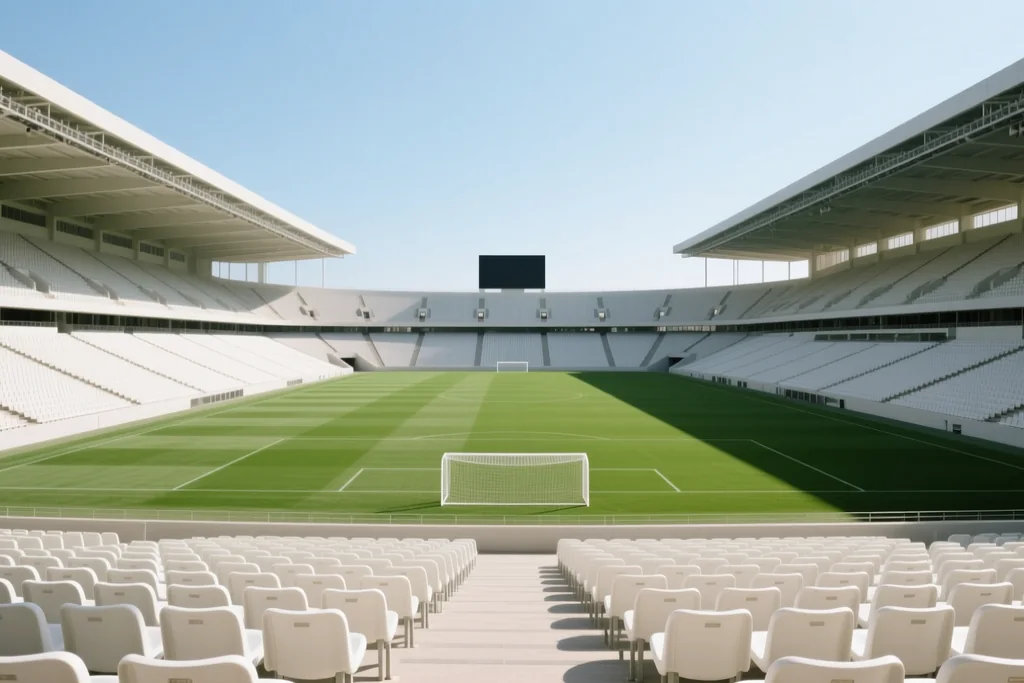
The Euro 2028 format will follow the structure used since 2016: twenty-four teams, six groups of four, and a knockout stage that begins with a round of 16. Fifty-one matches will be played across four weeks in June and July 2028, with the final at Wembley Stadium in London.
Twenty-four teams is a compromise between reach and quality, and it has changed how the group stage works. Sixteen of the twenty-four teams advance, which means four third-placed sides survive alongside the top two in each group.
Euro 2028 format: six groups of four
Twenty-four teams divide neatly into six groups of four, and each team plays three group matches. The top two from every group qualify directly for the round of 16, and the four best third-placed teams complete the sixteen.
That arithmetic has a specific consequence for the final round of group fixtures. With only eight of twenty-four teams eliminated at that stage, the final matchday produces less elimination drama per match than the World Cup format, but more ranking complexity.
| Stage | Teams | Matches |
|---|---|---|
| Group stage | 24 in six groups of four | 36 |
| Round of 16 | 16 | 8 |
| Quarter-finals | 8 | 4 |
| Semi-finals | 4 | 2 |
| Final | 2 | 1 |
| Total | 24 | 51 |
Fifty-one matches across roughly four weeks is a shorter and tighter tournament than a 48-team World Cup, which is why the European Championship has kept its format unchanged across three editions.
Euro 2028 format 24 teams: which third-placed teams go through
The four best third-placed teams are ranked using points, goal difference and goals scored, applied across the six groups. That ranking cannot use head-to-head results, because the teams involved never played each other.
It means qualification from third place can be decided by a single goal in a match in another group, sometimes in a fixture that has already finished hours earlier. Teams therefore play their final group match knowing only part of the equation.
Why the format has not been expanded
Qualifying for a 24-team tournament already includes most of Europe's mid-ranked nations, and expanding further would reduce the significance of the qualifying campaign. The current size keeps the qualifying competition meaningful while still providing a broader finals field than the sixteen-team era.
The format also keeps the group stage comprehensible. Six groups of four produce a clear bracket, and every team plays three matches, which is enough for a fair group stage without extending the tournament beyond a month.

Squad sizes and the extra substitutions
Tournament squads have grown over the last two editions, and matchday substitutions now allow a coach to change almost half of his outfield players. In a format where four teams can advance from third place, that depth is used to protect results rather than to chase them.
The practical effect is visible in the last twenty minutes of group fixtures. Teams that need a goal can commit more players forward knowing that replacements will restore their shape, while teams defending a lead can change an entire attacking line.
How the bracket is assembled after the group stage
The round of 16 is not drawn at random. Group winners are separated from the runners-up and from the third-placed teams in a fixed pattern, so that two teams from the same group cannot meet again immediately.
The pattern is published in advance, which means a team can trace its route from the moment its group position is settled. It also means the two halves of the draw can differ noticeably in strength.
Because four third-placed teams advance, the final group fixtures have to be completed before the bracket can be finalised. That is why the last matchday in each group is played simultaneously.
The knockout bracket and rest days
Sixteen teams advance to a round of 16 played across four days, and the winners move into a quarter-final stage two days later. From the last 16 onward, the tournament is effectively a knockout competition with rest days that vary by bracket position.
That variation is a known quirk of the expanded format. A team that finishes second in its group can sometimes earn a longer rest than a group winner, depending on which side of the bracket it lands on.
Euro 2028 qualifying format: what it means for qualification
Twenty-four places spread across the continent mean that most qualifying groups produce at least one qualified team and often two. The competition for the final places is therefore concentrated in the play-off route, which is decided separately from the group campaign.
It also means the tournament itself has a wider spread of ability than a sixteen-team edition did. Group matches often pair a strong favourite with a team making a first appearance, and that contrast is part of the format's design.
Five numbers in the Euro 2028 format
- 24 teams, six groups of four, unchanged since 2016.
- 36 group matches before the knockout stage begins.
- 16 teams advance, including the four best third-placed sides.
- 51 matches in total across the four-week tournament.
- One final, scheduled for Wembley Stadium in London in July 2028.
The venues hosting those matches are listed in the guide to Euro 2028 hosts and stadiums, and the path into the tournament is explained in the piece on seeding and the play-off pathway.
Read next
Euro 2028 Qualifying: How the Road to the Finals Works
Twenty-four places, with no more than two reserved for the hosts. How the Euro 2028 qualifying campaign is built from the first matchday.
2026-09-22
Euro 2028 Hosts: Four Nations, Nine Stadiums
Four nations, nine stadiums and a final at Wembley: the Euro 2028 host map and the travel it creates for supporters.
2026-09-16
Euro 2028 Seeding and the Play-Off Pathway
Pots, play-offs and second chances: how the Euro 2028 draw is seeded and how the last places are decided.
2026-08-11