
Heritage football team plays friendly match before season start
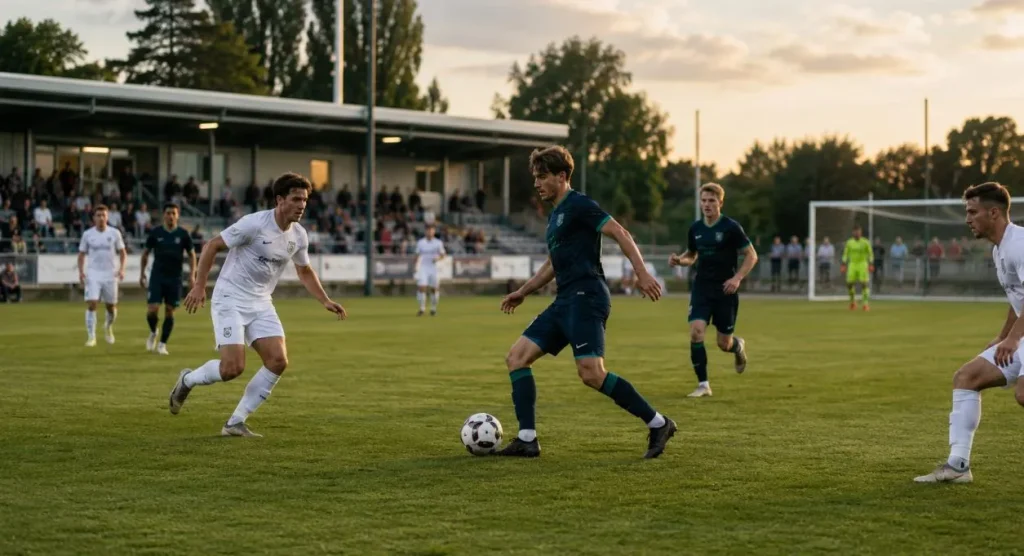
A friendly match before the season rarely carries the weight of league points, trophies or final standings, but it can reveal more than a scoreline. For the Heritage football team, the preseason fixture served as a practical checkpoint: a chance to move from training-ground work into live match rhythm, test physical readiness, give players meaningful minutes and identify what still needs polishing before competitive games begin.
Preseason football has a different emotional tone from the regular campaign. Players are eager to prove themselves, coaches are still shaping combinations, and the team is not yet expected to look fully finished. That makes a friendly match valuable. It creates pressure without the full consequences of a league fixture. Mistakes can be reviewed calmly. Strong moments can be reinforced. Fitness levels can be measured in match conditions rather than controlled drills.
For Heritage, the match was less about producing a perfect performance and more about asking the right questions. Can the team maintain structure after substitutions? Are players communicating clearly under pressure? Does the midfield connect defense and attack smoothly? Are the forwards getting enough service? Is the back line organized when possession is lost? These are the details that often decide how quickly a team settles once the season starts.
A friendly match as the first real test
Training sessions can prepare players physically and tactically, but they cannot fully copy the unpredictability of a match. A friendly brings different timing, contact, reactions and emotional pressure. Opponents do not move exactly as expected. Passes are played under pressure. Runs must be judged in real time. Players have to manage fatigue while still making decisions.
That is why the fixture mattered for Heritage. It gave the coaching staff a clearer picture of how training ideas translate into a game. A passing pattern that looks clean in practice may become rushed when an opponent presses aggressively. A defensive shape that works in a drill may need adjustment when the ball is switched quickly. A player who looks sharp in small-sided games may need time to adapt to the larger field and longer phases of play.
The match also helped separate match fitness from general fitness. A player can run well in conditioning drills but still struggle with the stop-start rhythm of football. Match fitness includes acceleration, recovery, concentration, timing, contact, awareness and the ability to repeat actions under fatigue. A friendly gives coaches a more honest view of those demands.
For players, the benefit is equally direct. They feel the pace of a real opponent. They learn where their touch needs to be quicker. They discover whether their positioning is helping the team or leaving gaps. They also get the emotional release of competing again after preseason work, which can sharpen focus for the final training sessions before the official opener.
What coaches look for beyond the result
The final score in a friendly can matter for morale, but it is rarely the main story. Coaches usually study the performance in layers. They want to know how the team started, how it reacted to pressure, how well it managed transitions and whether players understood the plan.
For Heritage, the most useful observations likely came from the patterns repeated throughout the match. A single mistake can happen to anyone. A repeated problem shows a training priority. If the team struggled to defend wide areas, that becomes a focus. If midfield support arrived too late, spacing needs work. If players created chances but failed to finish, the attack may be close to clicking but needs sharper execution.
A preseason friendly also gives coaches space to rotate the squad. Established players can build rhythm, younger players can gain experience, and fringe players can show whether they are ready for bigger roles. This is especially important for academy or school-level teams, where development matters alongside results.
Before the competitive season starts, coaches usually study several core areas from a match like this:
- Fitness levels across different positions, especially in the final stages of each half.
- Defensive organization when the team loses possession.
- Communication between goalkeeper, defenders and midfielders.
- Passing tempo when opponents press.
- Movement off the ball in attack.
- Set-piece discipline at both ends of the field.
- Reactions after mistakes, goals or missed chances.
These observations help shape the final part of preseason. Instead of guessing what the team needs, coaches can build sessions around what the match revealed. That makes the friendly a working tool rather than a ceremonial warm-up.
Squad rotation and player minutes
One of the key functions of a preseason friendly is distributing minutes carefully. A coach rarely wants every player to complete a full match at maximum intensity, especially before the season has begun. The goal is to build readiness without creating unnecessary fatigue or injury risk.
Heritage could use a match like this to balance several needs at once. Senior players may need enough minutes to rebuild rhythm. New players may need time with teammates to understand movement and communication. Younger players may need controlled exposure to the speed of a more competitive environment. Goalkeepers, defenders, midfielders and forwards all require different kinds of match involvement.
This is where substitution patterns become part of the strategy. A preseason friendly allows coaches to test partnerships: center-back pairings, midfield combinations, wide connections, forward pressing units and set-piece groups. Sometimes the most important lesson is not who starts, but which players naturally understand each other.
The match environment also shows personality. Some players become louder and more confident once the whistle blows. Others need encouragement to demand the ball or organize teammates. Coaches notice those details because football is not played only with technical ability. It also depends on trust, responsibility and decision-making under pressure.
A player who takes simple decisions well in a friendly may become a reliable option during the season. A player who struggles may not be written off, but the coaching staff gains a clearer view of what support is needed.
Tactical rhythm before the competitive opener
Preseason tactics often begin as ideas on a board or instructions during training. A friendly tests whether those ideas have become habits. Heritage’s match before the season start offered a chance to check the team’s basic game model: how it wants to build attacks, defend as a unit, press opponents and recover shape.
The most important tactical question is usually not whether the team looked perfect. It is whether players recognized the same situations in the same way. If one defender steps forward while another drops too deep, gaps appear. If one midfielder presses and the others stay passive, the opponent can play through. If attackers make runs at different moments, promising moves break down.
A friendly helps synchronize those reactions. Coaches can see whether instructions are becoming automatic or still require too much thinking. That matters because competitive matches move quickly. Players cannot stop and wait for guidance every time the ball changes zones.
A preseason game also gives the team a chance to practice different phases under real conditions.
| Match area | What it shows | Why it matters before the season |
|---|---|---|
| Build-up play | How calmly defenders and midfielders move the ball | Helps the team avoid rushed clearances and turnovers |
| Defensive shape | Whether players stay connected without the ball | Reduces gaps between lines under pressure |
| Transitions | How quickly the team reacts after winning or losing possession | Often decides chances in tight matches |
| Set pieces | Organization on corners, free kicks and throw-ins | Can create or prevent goals early in the season |
| Substitution impact | How well the structure holds after changes | Shows squad depth and tactical understanding |
These areas provide a practical map for the next training block. If build-up play looked stable but transitions were slow, the focus becomes reaction speed. If pressing looked energetic but poorly coordinated, the team can work on timing. If set pieces created danger, coaches can refine delivery and movement rather than rebuild everything.
Fitness, recovery and avoiding early-season problems
A friendly match close to the start of the season has to be managed carefully. Players need competitive intensity, but they also need to arrive at the first official match fresh enough to perform. Too little intensity leaves the team underprepared. Too much can lead to fatigue, soreness or avoidable injuries.
For Heritage, the fixture offered a useful physical test. Coaches could observe which players maintained speed late in their minutes, who recovered quickly after sprints, and where fatigue affected technique. Heavy legs often show up in small ways: late tackles, loose passes, poor body shape, slower reactions and reduced communication.
That information matters because early-season problems often come from poor load management. A team that rushes preparation may look energetic in the first 20 minutes but fade badly. A team that overtrains may enter the season already tired. The friendly helps coaches find the middle ground.
Recovery after the match is part of the preparation. Players need hydration, mobility work, sleep, nutrition and a sensible return to training intensity. The days after the friendly should not simply repeat hard work for its own sake. They should use what the match showed and protect the players who carried heavier loads.
The best preseason rhythm feels progressive. Training builds the base, the friendly tests it, recovery absorbs it, and the final sessions sharpen details. That sequence gives players a stronger chance of entering the season with confidence rather than uncertainty.
Team confidence and competitive mentality
Football teams need more than fitness and tactics. They need belief, communication and a shared sense of direction. A friendly match can strengthen those qualities because it gives the squad a common reference point. Players can talk about real moments: a strong defensive recovery, a missed chance, a good pressing sequence, a breakdown in marking, a promising connection between teammates.
These shared moments help build identity. A team that has only trained together may still feel unfinished. A team that has competed together, even in a friendly, begins to understand its emotional rhythm. Who leads when the match becomes difficult? Who calms the group? Who raises intensity? Who needs support after a mistake?
For Heritage, the match before the season start likely served as a mental bridge. The players moved from preparation into performance mode. They experienced the pace of opposition, the responsibility of roles and the importance of staying organized when tired. That is useful regardless of the result.
A friendly also helps coaches set standards without creating panic. If the performance was strong, the message is to keep building. If it exposed weaknesses, the message is that there is still time to correct them. Either way, the team gains clarity.
What supporters should take from the match
Supporters and families often look for signs that the team is ready. A preseason friendly can provide those signs, but they are not always the obvious ones. The score may be encouraging, but performance details matter more. Did the team look organized? Did players support each other? Were chances created through planned movement rather than luck? Did the squad respond well after substitutions? Was the effort level consistent?
These are better indicators than a single result. A team can win a friendly and still have unresolved issues. It can also lose and come away with valuable progress if the structure, fitness and mentality are improving. Preseason football should be judged with patience.
For Heritage, the friendly match should be viewed as one step in a longer preparation process. It gave coaches evidence, players rhythm and the squad a clearer sense of what must happen next. The final training sessions before the season start can now become more targeted.
A team is rarely fully formed before the first official match. It becomes sharper through competition, feedback and adjustment. The value of this friendly is that it brought those lessons earlier, when there is still room to refine them.
The season will demand consistency, resilience and trust between players. A preseason friendly cannot guarantee any of that by itself, but it can reveal whether the foundations are in place. For Heritage football team, the match was a timely rehearsal: not the final performance, but an important signpost on the way to the competitive campaign.