
Heritage Middle School baseball program: why it became one of the most talked-about in the district
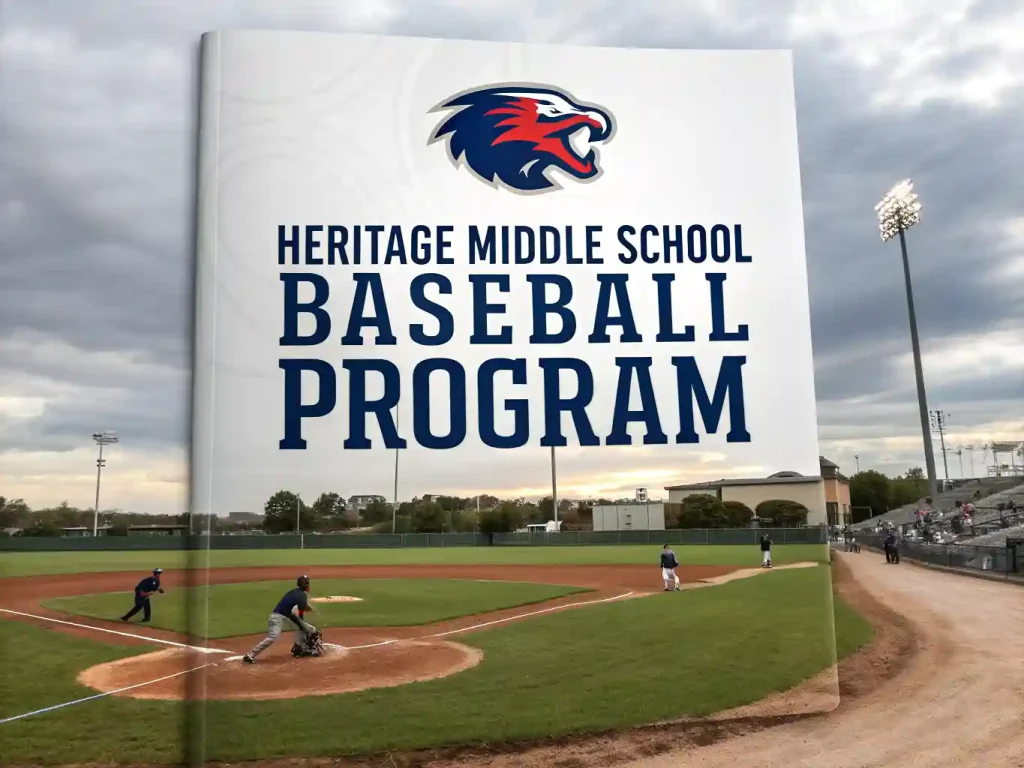
Baseball at the middle school level is rarely only about wins, scores, and who throws the hardest fastball. At its best, it becomes a small but powerful part of school life: a place where young athletes learn how to compete, how to handle pressure, how to listen, and how to carry themselves when classmates, parents, teachers, and local fans are watching. That is why the Heritage Middle School baseball program has attracted so much attention across the district. It is not just another team on a spring schedule. It has become a program people talk about because it blends development, discipline, community pride, and visible growth in a way that feels rare for this age group.
The interest around Heritage baseball did not appear overnight. It grew from the small details that families notice: organized practices, players who seem prepared, coaches who set clear standards, students who represent the school well, and games that feel meaningful even before the postseason begins. For many parents, the program has become a sign that middle school athletics can be serious without becoming cold, intense without losing its educational purpose, and competitive without forgetting that the athletes are still children learning who they are.
A program built on more than winning
The reason Heritage Middle School baseball stands out begins with the way the program appears to define success. Winning matters, of course. No serious team steps onto the field without wanting to compete. Players want to score runs, make plays, and feel the reward of a hard-earned victory. Coaches want their team to execute, stay focused, and improve as the season moves forward. Still, the deeper appeal of the program comes from the fact that the baseball field is treated as an extension of the classroom, not a separate world with different rules.
That approach matters at the middle school level because students are still forming their habits. A seventh- or eighth-grade player may already have talent, but talent alone does not make a dependable teammate. Young athletes need to learn how to arrive on time, take care of equipment, respond to correction, manage disappointment, and respect a role even when it is not the role they wanted. The programs that become respected in a district are usually the ones that take these habits seriously before anyone talks about batting averages or standings.
Heritage’s reputation seems to be tied to this broader idea of development. The program is discussed not only because of what happens during games, but because of the standards around the games. A player is expected to be a student first, a teammate always, and a competitor when the moment demands it. That order is important. It creates a culture where baseball is not used as an excuse to ignore school responsibilities or poor behavior. Instead, the sport becomes a reason to improve those areas.
Parents often respond strongly to that kind of structure. They want their children to enjoy the game, but they also want to see signs of maturity. When a program makes expectations clear, families know what they are supporting. They can see that practice is not just about taking swings and ground balls. It is also about learning discipline, communication, and accountability. Those lessons are easy to talk about in a school mission statement, but much harder to show consistently on a field. Heritage has drawn attention because the program appears to make those lessons visible.
There is also a practical reason this kind of foundation creates conversation. Middle school baseball sits between youth leagues and high school athletics. It is a bridge, and bridges need structure. Players who come from different travel teams, recreation leagues, and skill levels must quickly learn how to function as one school team. A strong program does not simply gather good players and hope for results. It teaches them a shared way to prepare, compete, and respond. That shared identity is one of the reasons people begin to see a middle school team as a true program rather than a short seasonal activity.
Coaching that turns potential into habits
Every discussed school sports program has a center of gravity, and in middle school athletics that center is usually coaching. At this age, coaching is not only about strategy. It is about translation. Coaches must turn big baseball ideas into language young players can actually use. They must teach mechanics without overwhelming athletes, correct mistakes without embarrassing them, and keep standards high without making the sport feel joyless.
That balance is difficult. Middle school players develop at different speeds. One athlete may already look physically ready for high school competition, while another is still learning how to trust his glove, control nerves, or understand defensive positioning. A good coach sees both players clearly. The advanced athlete needs challenge and refinement. The developing athlete needs patience, repetition, and confidence. A program becomes respected when both kinds of players believe they can grow inside it.
Heritage baseball has become a subject of district conversation because it seems to value habits over occasional flashes. A hard-hit double is exciting, but a quality at-bat after falling behind in the count says just as much about a player’s growth. A diving catch makes the crowd react, but being in the correct backup position shows whether the team has been taught the game properly. Strong programs are built in those less dramatic moments. They reveal themselves through spacing, communication, hustle, and how players respond after a mistake.
The best middle school coaches understand that young athletes need repetition with purpose. Running drills just to fill time does not create progress. Players improve when every drill is connected to a game situation and every correction has a clear reason behind it. That is where the reputation of a program often begins. Parents watching from the fence can tell when practice has order. Players can feel when the work connects to game day. Teachers and administrators notice when student-athletes carry that same structure into the school day.
The Heritage program also draws attention because it seems to recognize that confidence must be built carefully. Middle school baseball can be unforgiving. A player can strike out with runners on base, misplay a ball in front of classmates, or struggle to throw strikes while everyone watches. If the environment is careless, those moments can make a young athlete shrink. If the environment is strong, those same moments become teaching points. Players learn that mistakes are not ignored, but they are also not treated as permanent labels.
This is where coaching tone becomes so important. A program can demand effort and still protect a player’s willingness to learn. It can correct body language without humiliating the child. It can teach toughness without confusing toughness with fear. The most effective teams at this level usually have coaches who know when to push, when to pause, and when to remind a player that the next pitch matters more than the last one.
Why families and students are paying attention
The conversation around Heritage Middle School baseball has grown because the program gives families something they can understand and believe in. Parents do not need advanced statistics to recognize a team that is organized, motivated, and proud to represent its school. They see it in how players warm up, how they interact with coaches, how they sit in the dugout, and how they carry themselves after a win or a loss.
Middle school athletics can sometimes feel uneven. Some programs are highly structured, while others depend heavily on a few talented players. Some teams communicate clearly with families, while others leave parents guessing about schedules, expectations, and roles. When a program appears to have direction, it naturally becomes a talking point. Families compare experiences. Younger students begin to look forward to trying out. Older students talk about what it takes to make the roster. That kind of attention can quickly turn a team into one of the most visible programs in the district.
There is another reason baseball at Heritage seems to connect with the school community: it gives students a shared story. Not every student plays baseball, but many can still feel connected to the team. A strong school program creates moments that classmates remember: a close game, a comeback, a standout performance, a team celebration, or simply the pride of seeing peers represent the school well. These moments help build school spirit in a way that feels natural rather than forced.
The program’s appeal also comes from the fact that baseball is a patient sport. It rewards details. A team can be talented and still lose if it fails to communicate, misses signs, gives extra outs, or lets one bad inning become a collapse. That makes baseball a useful stage for middle school growth. Students are not only learning how to play; they are learning how to stay composed through a slow, shifting contest where momentum can change at any time.
Families tend to value programs that teach this kind of emotional control. A player who learns how to breathe after an error, encourage a teammate after a strikeout, or stay ready on the bench is learning skills that reach far beyond the field. Those habits matter in classrooms, friendships, future jobs, and daily life. The program becomes more than entertainment. It becomes a visible example of how sports can shape character when adults guide the experience well.
Several qualities help explain why Heritage baseball has become such a frequent subject among parents, students, and local sports followers.
• The program appears to combine competitive goals with clear expectations for behavior and school responsibility.
• Players are judged not only by talent, but by preparation, effort, attitude, and dependability.
• The team gives younger students something realistic to work toward as they move through middle school.
• Families see baseball as part of a larger school identity, not just a short spring activity.
• The program seems to prepare athletes for the jump to high school by teaching habits that coaches at the next level value.
These points matter because they are easy for a community to recognize. A school team earns attention when people can see both ambition and purpose. Heritage baseball has become discussed because it seems to offer both. It gives competitive athletes a place to develop, while also reminding families that school sports should help young people become better students, teammates, and leaders.
Player development that reaches beyond the field
A middle school baseball program becomes truly valuable when development is not limited to the strongest players. The most talked-about programs are usually the ones that create a path for growth across the roster. Some athletes may enter the season with years of travel baseball behind them. Others may have raw tools but limited experience. Others may simply be learning how to compete in a more organized setting. A healthy program finds ways to challenge all of them.
At Heritage, the attention around the baseball program appears connected to this broader developmental promise. The team is not only about choosing the best lineup for today. It is also about helping players understand what they need to become tomorrow. That is especially important in grades six through eight, when physical growth, confidence, coordination, and emotional maturity can change quickly. A player who struggles early in middle school may become a major contributor later if the program keeps him engaged and teaches him how to work.
Development at this age should be layered. Players need technical instruction, but they also need baseball awareness. They must learn why a cutoff throw matters, when to take an extra base, how to read a pitcher, why a productive out can help the team, and how defensive positioning changes with the count, score, and runners on base. These are not glamorous lessons, but they separate players who simply participate from players who understand the game.
The program’s strength can be seen through the kinds of skills it appears to emphasize. Strong middle school baseball is not built on one star pitcher or a few powerful hitters. It is built on repeatable habits that survive pressure. When a team can throw strikes, make routine plays, run the bases with purpose, and stay composed after mistakes, it becomes difficult to play against even if it is not physically dominant at every position.
A useful way to understand the program’s appeal is to look at how different areas of development connect to the larger school experience.
| Area of development | What players learn | Why it matters for the school community |
|---|---|---|
| Practice discipline | Showing up prepared, listening carefully, repeating skills with focus | Builds habits that support classroom performance and personal responsibility |
| Game awareness | Understanding situations, communicating, making smart decisions under pressure | Creates a team that plays with maturity and represents the school well |
| Emotional control | Handling errors, strikeouts, close games, and limited playing time | Teaches resilience that students can use beyond athletics |
| Team identity | Supporting teammates, accepting roles, respecting coaches and opponents | Strengthens school pride and creates a healthier athletic culture |
| Long-term preparation | Building habits that translate to high school baseball | Gives younger athletes a clear path and keeps families invested |
The table shows why the program has become more than a sports story. Each baseball skill carries a larger lesson. A player learning to stay ready in the dugout is also learning patience. A player backing up a throw is learning responsibility when the spotlight is elsewhere. A player accepting correction is learning humility. Those lessons are often what parents remember most after the season ends.
This kind of development also helps explain why the program can generate district-wide attention. People notice when a middle school team plays with unusual poise. They notice when players seem prepared for situations that often overwhelm young athletes. They notice when a team’s energy stays steady instead of rising and falling with every mistake. Those traits do not happen by accident. They come from repeated expectations and a coaching staff that treats details as part of the team’s identity.
Community pride and the power of school identity
One of the strongest reasons Heritage Middle School baseball has become widely discussed is the way it connects athletics with school pride. A good middle school team can do something powerful: it can give students, teachers, parents, and local supporters a common reason to care. The games become more than dates on a schedule. They become gatherings where the school’s personality is visible.
That kind of pride is especially meaningful in middle school, where students are still discovering where they belong. A successful or well-run athletic program can give them a stronger sense of connection. Players feel responsible for representing something larger than themselves. Classmates see peers working toward a shared goal. Families become more involved in school life. Teachers see students in a different light, not only as names on assignments, but as young people learning leadership, pressure, and commitment.
Heritage baseball seems to have become a symbol of that connection. The team’s visibility gives the school another point of identity. When people talk about the program, they are often talking about more than baseball. They are talking about the kind of student-athletes the school wants to produce. They are talking about whether competition can be healthy. They are talking about how much a middle school program should expect from its players and how much support young athletes need in return.
Community pride also grows when a program feels accessible. Middle school sports work best when they do not belong only to the players on the field. Younger students should be able to imagine themselves trying out someday. Parents should feel welcome around the program. Teachers should feel that athletics supports the school day rather than competes with it. Administrators should see the team as part of the school’s culture, not a separate activity operating on its own.
The most respected programs often create a clear message: wearing the school name matters. That message can be seen in small actions. Players run on and off the field. They respond respectfully to umpires. They clean the dugout. They encourage teammates. They understand that body language is visible. These behaviors may seem minor compared with the scoreboard, but they are often what build a program’s reputation.
Heritage’s baseball program has likely become a frequent topic because people can sense that identity. A team with school pride plays differently. It competes with urgency but not panic. It celebrates success without losing humility. It treats opponents as challenges, not enemies. It understands that every game is also a public expression of what the school values.
This matters because middle school athletics can set the tone for future participation. If students see sports as chaotic, unfair, or disconnected from school values, they may lose interest. If they see a program that is serious, supportive, and meaningful, they are more likely to stay involved. The ripple effect can reach high school programs, youth leagues, and the larger community.
The high school pipeline and future expectations
Another reason Heritage Middle School baseball has drawn attention is its role in preparing athletes for the next level. Middle school teams do not exist in isolation. They often shape the habits, confidence, and expectations players carry into high school. A strong program can make the transition smoother by teaching athletes what older coaches will demand before they ever reach a varsity field.
High school baseball requires more than natural ability. Players must understand pace, preparation, and responsibility. They must handle deeper rosters, tougher competition, longer seasons, and more specialized roles. A middle school program that introduces these expectations early gives athletes a real advantage. It does not need to turn young players into finished products. It needs to help them become coachable, reliable, and ready for more advanced instruction.
Heritage baseball appears to attract attention because it gives families confidence in that path. Parents can see that their children are not simply playing games. They are learning how to prepare for a more demanding athletic environment. Players begin to understand that making a team is not the final goal. Staying committed, improving steadily, and contributing to a group are what keep an athlete moving forward.
This pipeline effect can also raise the standard across the district. When one middle school program becomes known for strong preparation, other programs notice. Games become more competitive. Coaching conversations become more serious. Families begin to compare not only results, but development models. That kind of attention can be healthy when it pushes everyone toward better organization, clearer expectations, and a more thoughtful approach to student athletics.
The key is keeping ambition in balance. Middle school baseball should prepare players, but it should not rush them into a high school pressure system before they are ready. The best programs know how to build intensity gradually. They teach players to care deeply without making every at-bat feel like a career judgment. They show athletes what excellence looks like while still leaving room for mistakes, growth, and joy.
Heritage’s reputation will likely depend on whether it can maintain that balance. Attention is valuable, but it also brings expectations. Once a program becomes widely discussed, people begin to watch more closely. They want to know whether the team can keep developing players, whether the culture remains healthy, and whether the standards remain consistent as new groups of students come through.
The strongest sign of a real program is not one memorable season. It is continuity. Players graduate from middle school, new students arrive, rosters change, and talent levels rise and fall. A program with a true identity can survive those changes because its foundation is not built on one class or one standout athlete. It is built on habits, relationships, and a clear understanding of what the school wants baseball to represent.
Why the conversation around Heritage baseball matters
The attention around Heritage Middle School baseball matters because it reflects a larger question about youth sports: what should school athletics be for? Some people see sports mainly as a path to higher competition. Others see them as a place for friendship and school spirit. The best programs do not need to choose only one answer. They create an environment where athletes can compete seriously while still learning lessons that matter outside the lines.
Heritage has become one of the most talked-about baseball programs in the district because it appears to sit in that important middle space. It is competitive enough to earn attention, structured enough to gain trust, and connected enough to become part of school identity. That combination is not easy to build. It requires coaches who care about details, players who buy into expectations, families who support the process, and a school community that understands the value of doing youth sports well.
The real measure of the program will not be limited to any single score or season. It will be seen in the players who leave more confident than they arrived. It will be seen in students who learn how to respond after failure. It will be seen in athletes who reach high school with better habits, stronger character, and a clearer sense of responsibility. It will be seen in the way younger students look at the team and think, with real motivation, that they want to be part of it someday.
That is why the discussion around Heritage baseball feels earned. The program has become interesting because it gives people more to talk about than wins and losses. It shows how a middle school team can become a source of pride, a training ground for future athletes, and a meaningful part of a young person’s education. In a district full of teams and activities, that is what makes a program stand out.