
Heritage Sports Academy updates training equipment for teams
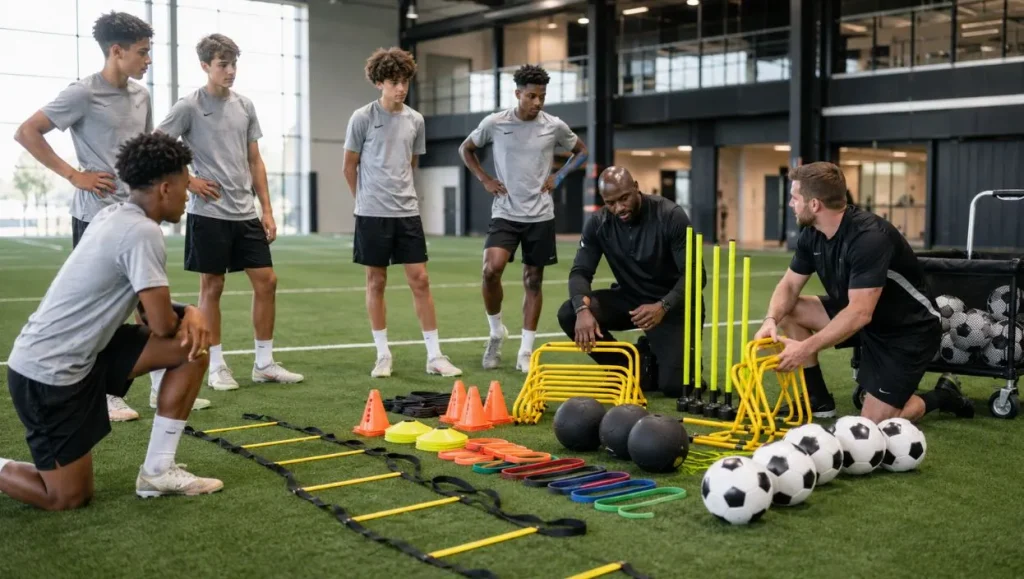
Heritage Sports Academy has strengthened its team training environment with updated equipment designed to support safer sessions, better skill development and more structured preparation across different sports. For an academy setting, equipment is never just a background detail. It shapes how coaches build sessions, how athletes repeat technical movements, how teams manage intensity and how safely young players move from basic drills to competitive situations.
The update reflects a wider shift in youth and school sports: training spaces are expected to do more than provide balls, cones and open ground. Teams need tools that help coaches organize practice, measure effort, protect athletes from unnecessary strain and make sessions more purposeful. Good equipment cannot replace coaching quality, discipline or team culture, but it can make those elements easier to apply every day.
For players, the change is practical. A better set of training tools means less waiting, more repetition and clearer drills. For coaches, it offers more flexibility: one group can work on speed, another on coordination, another on passing patterns, another on recovery or mobility. For families, updated equipment signals that the academy is investing in the everyday details that influence player progress, not only in match-day results.
Why equipment matters in team development
The value of training equipment is often underestimated because the most visible part of sport is competition. Matches show goals, points, tackles, saves, rebounds and performances under pressure. Training is quieter, but it is where habits are formed. The quality of that training depends partly on how well the environment supports repetition, correction and safe progression.
A team with limited equipment may still work hard, but sessions can become crowded or repetitive. Players wait in lines. Coaches simplify drills because they do not have enough markers, resistance tools, goals, rebounders or conditioning stations. Younger athletes may lose focus during long pauses. Older players may not receive enough position-specific work. Updated equipment helps reduce those gaps.
For an academy, the challenge is even broader because teams are usually at different stages of physical and technical development. A younger group may need coordination ladders, soft hurdles and simple passing targets. A more advanced team may need resistance bands, reaction tools, weighted balls, video-supported review or sport-specific conditioning aids. The same facility must support beginners, developing athletes and competitive players without treating them all the same.
The strongest equipment updates usually improve four areas at once:
- Safety, because athletes can train with tools that match their age, strength and movement level.
- Repetition, because more players can stay active during each drill.
- Variety, because coaches can build sessions around speed, balance, control, accuracy and decision-making.
- Progress tracking, because structured drills make it easier to see what has improved.
- Team organization, because equipment stations help divide groups without losing rhythm.
These benefits are not cosmetic. In a team environment, small improvements in practice structure can add up over a season. A player who gets more touches, more controlled sprints, more footwork repetitions and more targeted feedback is more likely to build confidence and consistency.
What the update means for coaches and players
For coaches, updated equipment creates more room to plan sessions with purpose. Instead of relying on the same general drills, they can separate training into focused blocks: warm-up, activation, technical repetition, tactical movement, conditioning and cool-down. Each block can have a clearer role.
A football or soccer team, for example, can use agility markers for footwork, small goals for finishing, mannequins or poles for movement patterns, and resistance tools for acceleration work. Basketball teams may benefit from passing targets, cones, rebounding aids and coordination tools. Volleyball, baseball, softball and other team programs can also use updated gear to make practices more precise and less dependent on improvised setups.
For players, the strongest effect may be psychological. New or better-organized equipment often makes training feel more serious. Athletes understand that practice has standards. They see that preparation is not random. This can improve attention, especially among younger players who respond well to visible structure.
The update also supports different learning styles. Some athletes understand verbal instruction quickly. Others need repeated visual cues, physical targets or smaller stations that break a skill into manageable parts. Equipment gives coaches more ways to teach without stopping the entire group for long explanations.
A useful training environment should not overload athletes with gadgets. The best tools are the ones that solve real coaching problems. They make movement cleaner, drills faster to organize and feedback easier to deliver.
| Equipment area | Main training purpose | Team benefit |
|---|---|---|
| Agility ladders, cones and hurdles | Footwork, balance and direction changes | Faster warm-ups and sharper movement patterns |
| Resistance bands and strength tools | Controlled power, stability and injury prevention | Better physical preparation for repeated effort |
| Small goals, targets and rebounders | Accuracy, reaction and technical repetition | More touches and less waiting during drills |
| Recovery and mobility tools | Cool-down, flexibility and muscle care | Better readiness between sessions |
| Storage and station equipment | Session organization and equipment control | Cleaner practice flow and safer training areas |
The real value comes from combining these tools with thoughtful coaching. A ladder does not automatically create faster feet. A resistance band does not automatically build strength. A target does not automatically improve accuracy. The improvement happens when coaches use equipment within a clear plan and athletes understand why each drill matters.
Safer training starts with better structure
Safety in sports is not only about avoiding obvious hazards. It is also about managing load, fatigue, contact, surface use, warm-up quality and progression. Updated training equipment can help coaches create sessions where athletes are challenged without being pushed into careless movement.
This is especially important for team sports because players often train in groups with different physical levels. Some athletes grow early, some late. Some return from minor injuries. Some are new to the sport. Some are ready for intense conditioning, while others need more basic movement control. Equipment allows coaches to adjust difficulty without separating athletes entirely from the team.
Soft hurdles, controlled resistance tools and clearly marked stations can reduce confusion during fast drills. Mobility equipment can make cool-downs more consistent. Better storage can keep loose items away from playing areas. Clear boundaries can help prevent collisions when several groups train at once.
A safer practice environment also supports confidence. Young athletes improve when they feel challenged but not exposed. If a drill is too chaotic, players become hesitant or reckless. If it is too easy, they lose engagement. Proper equipment helps coaches find the middle ground where learning is active, focused and repeatable.
The update also encourages more responsible session design. Instead of running every player through the same high-intensity work, coaches can rotate groups through different stations. That makes it easier to balance technical development with conditioning and recovery.
How team sessions can become more effective
The biggest improvement may appear in the rhythm of practice. In many team settings, time is lost during transitions: setting up cones, waiting for equipment, explaining drills, moving players between areas or adapting a session when something is missing. A better equipment base reduces those interruptions.
When tools are available and organized, coaches can build sessions that flow naturally. Athletes move from warm-up to skill work, then to game-like drills, then to conditioning and recovery with less downtime. That matters because attention has limits. The more time players spend waiting, the more energy coaches spend regaining focus.
A productive academy session often depends on clear stages. Updated equipment makes these stages easier to repeat from week to week without becoming dull.
- Movement preparation comes first, with simple tools for balance, coordination and joint readiness.
- Technical repetition follows, using balls, targets, markers or rebounders to increase meaningful touches.
- Tactical work connects individual skills to team decisions, spacing and communication.
- Conditioning develops speed, endurance or strength in ways that match the sport.
- Recovery closes the session, helping athletes leave practice prepared for the next training day.
This kind of structure gives players a sense of progress. They know why the session starts with movement, why a technical drill matters, why conditioning is linked to performance and why recovery is part of training rather than an optional extra.
For coaches, it also creates a more consistent language. If athletes repeatedly train in organized stations, they begin to understand expectations faster. That saves time and allows more detailed feedback as the season develops.
Supporting different teams without one-size-fits-all training
One of the important advantages of an equipment update is flexibility across teams. An academy may serve athletes from different age groups, sports and competitive levels. A single training model cannot fit everyone. Updated equipment allows coaches to scale drills up or down while keeping the same basic principle.
Younger athletes may use equipment for coordination, rhythm and confidence. Their sessions should feel active and clear, with enough variety to hold attention. Intermediate players may use the same tools for sharper technique and better decision-making. Advanced teams may need more demanding patterns, tighter spaces, faster reactions and more sport-specific conditioning.
The same cone setup can teach basic movement to one group and advanced pressing angles to another. The same resistance band can support activation for a younger athlete and power development for an older one. The same target can help beginners learn accuracy and advanced players refine speed under pressure.
This flexibility is important because good development is not rushed. Athletes need challenge, but they also need progression. Equipment helps coaches create steps between simple practice and full competition.
The update can also improve inclusion within teams. Not every player develops at the same speed, and not every athlete learns in the same way. With more stations and training tools, coaches can give players meaningful work without making differences feel like punishment or favoritism.
A long-term investment in academy culture
Training equipment is a practical investment, but it also sends a cultural message. It tells athletes that preparation matters. It tells coaches that their sessions deserve support. It tells families that development is being taken seriously beyond uniforms, fixtures and final scores.
For Heritage Sports Academy, the update can strengthen the link between daily practice and long-term player growth. Better equipment helps create a setting where athletes learn to train with intention. They arrive expecting structure. They understand that warm-ups, drills, conditioning and recovery are all connected. They see improvement as something built through repeated, focused work.
The most successful academies are not defined only by the most talented athletes. They are defined by the habits they create around talent. Updated equipment can support those habits when it is used consistently and intelligently.
The next step is implementation. Equipment must be maintained, stored properly and integrated into coaching plans. Staff need clear routines for setup and safety. Athletes need to understand how to use each tool correctly. Without that, even high-quality gear can become clutter. With good organization, it becomes part of the academy’s daily standard.
What families and athletes should notice
Families may not always see the full effect of updated equipment immediately. The difference is often visible in small practice details rather than dramatic announcements. Players spend less time standing still. Drills look more organized. Warm-ups become more purposeful. Coaches can divide teams into smaller groups. Sessions feel active, but not chaotic.
Athletes may notice that training becomes more varied and more demanding in a good way. They may be asked to repeat movements with better control, work at specific stations, focus on recovery habits or complete drills that connect physical preparation with game situations.
Over time, the signs of a stronger training environment become clearer: better movement quality, sharper communication, more confident players and a stronger connection between practice and competition. Equipment alone does not guarantee those outcomes, but it gives coaches more tools to build them.
Heritage Sports Academy’s update should be seen as part of a broader commitment to team development. The value is not only in new gear, but in what the gear makes possible: safer routines, clearer sessions, stronger preparation and more consistent athletic growth. For young athletes, that can make the training ground feel less like a place where they simply show up and more like a place where progress is built session by session.