
Tactical Trends in National Teams to 2028

Tactical trends travel from club football into national teams slowly and selectively, because international squads do not have the training time to install complexity. What survives the journey is a small set of principles that can be repeated in four or five sessions a year, and the 2026-28 cycle is already being shaped by them.
The trends below are not predictions about results. They are the structural choices that recur across national teams during a two-year cycle: how a team presses, how it builds from the back and how it uses the players it has rather than the ones it would like.
Tactical trends: pressing structures that survive short windows
A high press requires coordinated triggers and hours of rehearsal. National teams therefore tend to press in simpler, more defined patterns: a front two or three that commits when the ball travels to a specific area, with the rest of the team holding a compact shape behind it.
The alternative is a mid-block, which asks less physical coordination and suits squads that meet briefly. It also protects against the counter-attack, which is the most common way a well-organised team is punished in tournament football.
National team tactics: build-up patterns from goal kicks
Playing out from the goalkeeper has become standard, and national teams have adapted it to their limited preparation time. Rather than elaborate rotations, the pattern is usually simple: one midfielder drops, the full-backs advance, and the team looks for a specific pass into a wide area.
The risk is well known and heavily scouted. A turnover in the build-up phase gives the opponent the ball close to goal, which is why several national teams use a hybrid approach, playing short against some opponents and going long against others.
| Principle | Why it suits international football | Cost |
|---|---|---|
| Defined pressing triggers | Simple to rehearse, easy to communicate | Less aggressive than a club press |
| Hybrid build-up | Reduces risk against a high press | Requires a striker who can hold the ball |
| Back three with wing-backs | Covers a squad short of wide defenders | Demands high fitness from wing-backs |
| Set-piece specialisation | Produces goals with limited training time | Depends on one or two takers |
| Compact rest defence | Protects against transitions after losing the ball | Concedes territory |
| Positional flexibility | Puts the best eleven players on the pitch | Requires versatile individuals |
None of these ideas is new. What changes between cycles is the emphasis, and the emphasis is usually set by whichever approach produced results in the most recent tournament.
National team tactical trends: set pieces as a competitive advantage
A disproportionate share of tournament goals comes from dead balls, and set pieces are the one area where a national team can gain an advantage with almost no training time. Rehearsing six routines is far easier than installing a pressing system.
Specialist coaches have become common in the international game for exactly that reason, and much of their value is analytical: identifying which opponent concedes from which delivery, and structuring routines around it.
What the next tournament tends to change
Tactical fashion in international football follows tournaments closely. A system that wins a major competition is copied quickly by national teams with similar players, and one that fails under pressure is quietly dropped.
That pattern makes prediction unreliable in one specific way: the winning approach is usually the one nobody was already copying. Between tournaments the discussion tends to be about emulating the last winner rather than anticipating the next one.
Hybrid full-backs and the four-versus-three debate
The modern full-back has two jobs, and international teams increasingly split them: one side stays wide to provide width, while the other steps inside to create a midfield overload in possession. The asymmetry is easier to rehearse than a fully fluid system.
It also solves a selection problem. A squad with three good central midfielders and only one specialist left-back can keep all four on the pitch by asking one of them to invert rather than by leaving a player out.
What carries over from club football
Players arrive from club sides with tactical habits, and national coaches build on those rather than replacing them. A squad drawn largely from clubs that press high will press high internationally, because the habits already exist.
That is why the biggest tactical shifts in national teams usually follow a generational change rather than a coaching appointment. When a majority of the squad plays a certain way every week, the international version of that style becomes the path of least resistance.
Five trends to watch through 2028
- Defined pressing triggers rather than continuous high pressure across the pitch.
- Asymmetric full-backs, with one side inverting into midfield when in possession.
- Set-piece specialisation as the most efficient use of limited preparation time.
- Hybrid build-up that can switch between short passes and a direct ball.
- Back-three variations, chosen to fit available defenders rather than as a philosophy.
The squad mechanics behind those choices are covered in the guide to squad depth and rotation, and the fixtures that test them are set out in the piece on the Nations League 2026-27.
Read next
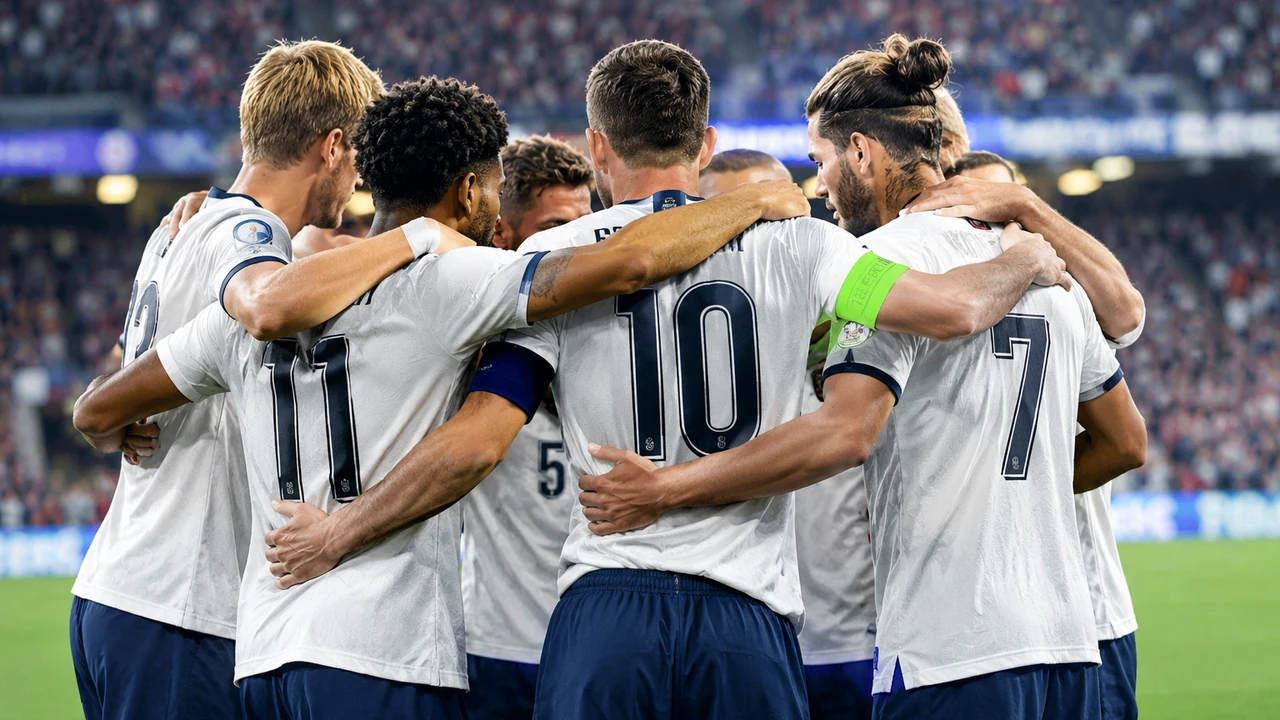
The National Team Cycle 2026-28: What Squads Face Now
Two years, a fixed number of international windows and one destination. How the 2026-28 cycle is structured for every national team.
2026-09-26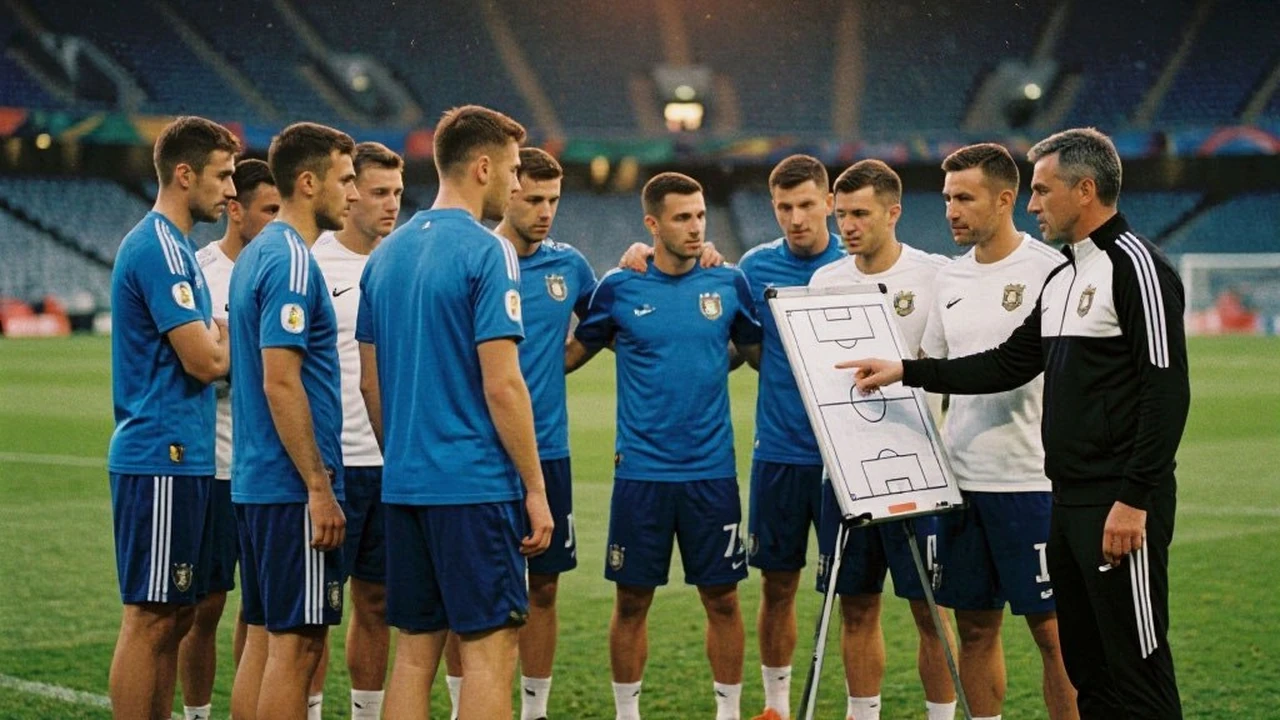
Rebuilding a National Team After a World Cup
Every cycle ends with a wave of retirements. The rebuilds that work share the same sequence of decisions.
2026-09-20
National Team Rotation: Squad Depth and Minutes
Two matches in five days with one training session between them. Rotation in international football is a logistics problem before it is a tactical one.
2026-09-14